Sinchuk day pillar (辛丑) — Earth on the Wall, Void and Ten God
A day pillar is the stem and branch of the birth day, rather than the birth-year animal. Sinchuk is combination 38 of the sixty-pillar cycle. The engine reports a Yin Metal Day Master, Sin, above branch Chuk (Earth). Nayin: Earth on the Wall · Void: Jin·Sa · Ten God: Indirect Resource · Twelve Sinsal: Hwagaesal (Canopy Star)
In this guide
- What forms the Sinchuk day pillar?
- What does Earth on the Wall mean, and how does its paired pillar differ?
- Why is the main hidden stem classified as Indirect Resource?
- When do the next Sinchuk days occur?
- What does the Void pair Jin·Sa mean?
- Why is this branch in the Hwagaesal (Canopy Star) position?
- Can Sinchuk alone determine personality, compatibility or work?
- Frequently asked questions
What forms the Sinchuk day pillar?
A day pillar is the stem and branch of the birth day, rather than the birth-year animal. Sinchuk is combination 38 of the sixty-pillar cycle. The engine reports a Yin Metal Day Master, Sin, above branch Chuk (Earth).
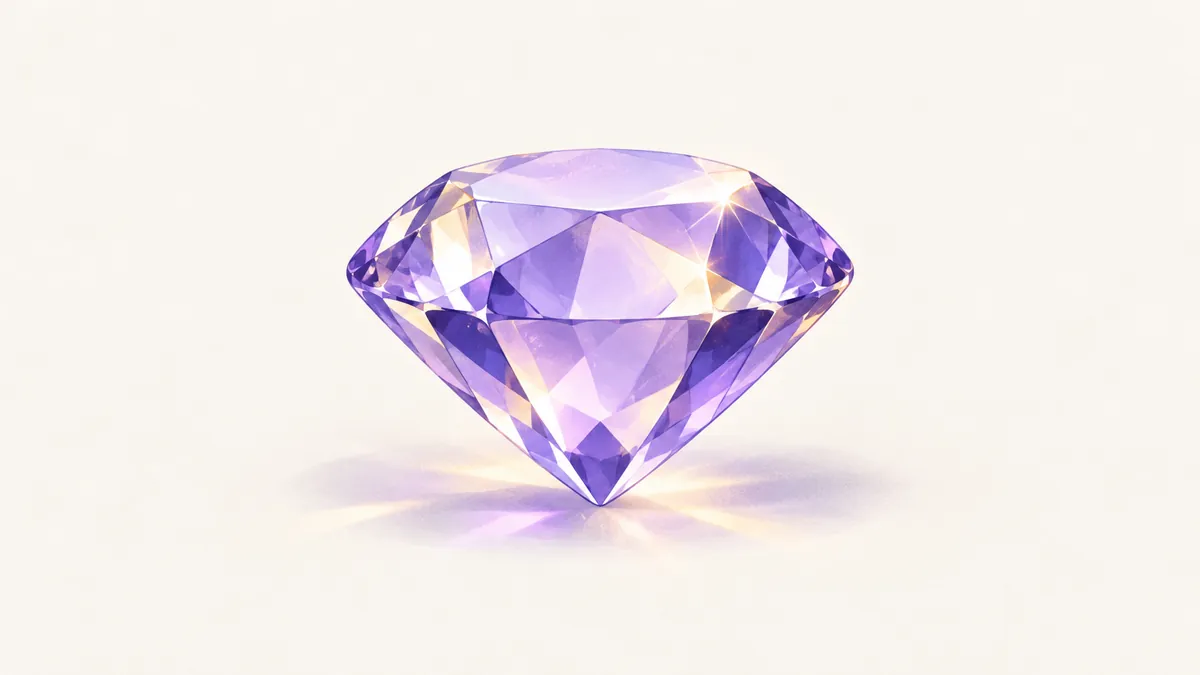
The illustration uses a polished gem for Sin. Set a finish line so precision does not become a demand for perfection.
The branch Chuk is Earth; its hidden stems are Gye · Sin · Gi, ending with the main stem Gi. The branch animal is Ox. This animal describes the day branch here, not automatically the person's birth-year sign.
| Field | Engine result and convention |
|---|---|
| Day Master | Sin (辛) · Yin Metal |
| Day branch | Chuk (丑) · Earth · Ox |
| Nayin | Earth on the Wall (壁上土) |
| Hidden stems / main | Gye · Sin · Gi / Gi |
| Ten God | Indirect Resource |
| Void | Jin·Sa |
| Twelve Sinsal | Hwagaesal (Canopy Star) |
What does Earth on the Wall mean, and how does its paired pillar differ?
Earth on the Wall (壁上土) is the traditional Nayin name shared with Gyeongja. A Nayin image is a cultural metaphor, not an element count, a useful-element prescription or proof of a personality trait. Its element can differ from the Day Master's element without being an error.
The pair makes the distinction concrete: Sinchuk has main hidden stem Gi and Indirect Resource, while Gyeongja has Gye and Hurting Officer. Their branch positions are Hwagaesal (Canopy Star) and Jangseongsal (General Star). Sharing the name Earth on the Wall therefore does not give the two combinations the same structure or life story.
| Comparison | This pillar | Nayin pair |
|---|---|---|
| Day pillar | Sinchuk | Gyeongja |
| Polarity | Yin | Yang |
| Main hidden stem | Gi | Gye |
| Ten God | Indirect Resource | Hurting Officer |
| Void | Jin·Sa | Jin·Sa |
| Twelve Sinsal | Hwagaesal (Canopy Star) | Jangseongsal (General Star) |
Why is the main hidden stem classified as Indirect Resource?
For Sinchuk, the engine compares Day Master Sin with main hidden stem Gi, producing Indirect Resource. The surface elements are Metal and Earth; the Ten God calculation uses the hidden stem's element and polarity, not just the branch's surface label.
This element produces the Day Master with matching polarity. Indirect Resource offers a learning metaphor, not a diagnosis of genius or isolation.
This is the representative classification by the main hidden stem. Other hidden stems remain part of the chart; the month, hour and surrounding pillars can change the interpretation's emphasis.
A second comparison keeps the Day Master fixed: Sinmi also begins with Sin, but its main hidden stem is Gi, its Ten God Indirect Resource, and its Nayin Roadside Earth. In this comparison the lower character, not the upper one, changes the result. Compare the actual fields before borrowing an interpretation from another pillar with the same stem.
When do the next Sinchuk days occur?
Starting from 26 October 2026, these are the next three calendar days whose engine dayGZ() equals Sinchuk. They repeat at 60-day intervals. A matching day is not a promise of a successful exam, contract or relationship, and does not require moving a real appointment.
| Calendar date (as of 2026-10-26) | Day pillar |
|---|---|
| 2026-11-23 · Mon | Sinchuk (辛丑) |
| 2027-01-22 · Fri | Sinchuk (辛丑) |
| 2027-03-23 · Tue | Sinchuk (辛丑) |
A recurring day is a shared calendar label, not a private appointment with fortune. You can put it beside a journal entry and compare what actually happened, including observations that do not fit the interpretation. After the three dates listed here pass, check the calculator again for the next cycle; the article's reference date does not move automatically.
What does the Void pair Jin·Sa mean?
The engine's sixty-cycle table gives Jin·Sa for Sinchuk. Gongmang, often called Void, identifies two unused branches in its ten-day group. A two-pillar Nayin pair and a ten-day group are different classifications.
Seeing either branch elsewhere in a chart does not erase a person, relationship or opportunity. Treat this as an auxiliary traditional idea, not a reason to cancel plans or spend money. Real circumstances take priority.
Why is this branch in the Hwagaesal (Canopy Star) position?
Here the reference is the day branch Chuk's own Three Harmony group, and the target is Chuk again. That produces Hwagaesal (Canopy Star). It is not a calculation from the birth-year branch and does not list every star in a full chart.
A storage branch is linked with concentration and consolidation. It does not diagnose loneliness; choose a balance between focus and contact that suits your life.
Can Sinchuk alone determine personality, compatibility or work?
Sinchuk is one pillar of a complete saju chart. A different birth month, hour, other pillars and long-term periods can change the context. These two characters cannot fix personality, marriage prospects or career, and MBTI uses a different basis rather than an interchangeable code.
Use interpretations as questions to compare with experience. They do not guarantee outcomes or support medical, legal or investment decisions. The linked concept guides explain the terms before any personal interpretation.
First confirm that a birth date is Gregorian or convert a known lunar date using the correct country's calendar. For a day pillar, year alone is insufficient. Time near the late-night day boundary also requires a stated convention. The web calculator offers optional corrections; use the same options when comparing two results rather than assuming different displays prove an error.
Start with today's rhythm
Available on iPhone and Android. Daily rhythm cards and adding events are free. Check the cost before opening a paid reading. Store availability and app language support depend on the listing.


Frequently asked questions
What is the Sinchuk day pillar?
It is 辛丑, combination 38 of sixty. Its Nayin is Earth on the Wall; its Void branches are Jin·Sa.
What is Sinchuk's day-branch Ten God?
Using main hidden stem Gi within Gye · Sin · Gi, the engine computes Indirect Resource relative to Sin. This is the main-stem classification.
When is the next Sinchuk day?
As of 2026-10-26: 2026-11-23, 2027-01-22, 2027-03-23. These calendar days recur every 60 days and do not guarantee a good outcome.
Is Hwagaesal (Canopy Star) the only star in a Sinchuk chart?
No. Hwagaesal (Canopy Star) here describes the day branch's position within its own Three Harmony group. A full chart and another reference branch can give other classifications.